
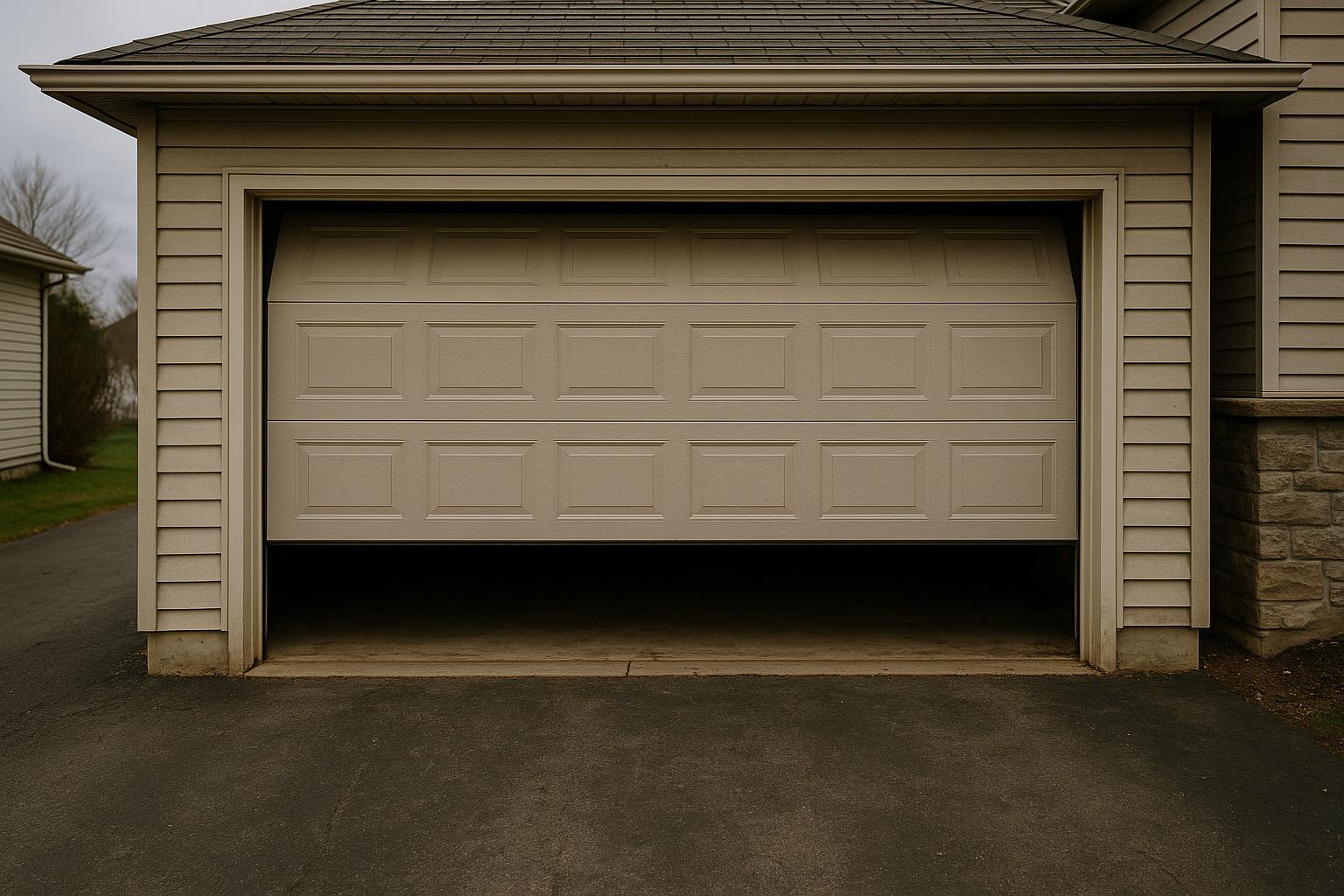
That Frustrating Moment When Your Garage Door Won't Stay Closed
You press the button on your garage door remote, watch the door glide downward, and then — just before it reaches the floor — it stops and reverses right back up. You try again. Same thing. Maybe it works on the third attempt, or maybe it doesn't work at all.
This is one of the most common garage door complaints we hear from homeowners in Highland and the surrounding communities. The good news is that a reversing garage door is usually caused by a handful of identifiable issues, most of which can be resolved without replacing the entire system. Let's walk through the most likely culprits and what you can do about each one.
Understanding Why Garage Doors Have a Reversal Feature
Before we dive into troubleshooting, it's important to understand that your garage door is designed to reverse under certain conditions. Federal safety standards require all automatic garage door openers manufactured after 1993 to include an auto-reverse mechanism. This feature exists to prevent the heavy door from closing on a person, pet, or object.
Your garage door opener uses two primary safety systems to trigger a reversal:
- Photo-eye sensors: These are the small sensors mounted near the bottom of your garage door tracks on either side. They project an invisible beam across the opening. If something breaks that beam, the door reverses.
- Pressure sensitivity (force settings): If the door encounters resistance while closing — like hitting an object or binding against the track — it reverses to prevent damage or injury.
When your door reverses unexpectedly, it almost always traces back to one of these two systems or the components connected to them.
Common Causes of a Garage Door That Reverses Before Closing
1. Misaligned or Dirty Photo-Eye Sensors
This is the number one reason garage doors reverse prematurely. The photo-eye sensors on each side of the door opening must be perfectly aligned with each other to maintain their infrared beam. If one sensor gets bumped, shifts slightly, or accumulates dirt, dust, or cobwebs, the opener interprets it as an obstruction and reverses the door.
Here's what you can do:
- Wipe both sensor lenses gently with a soft cloth.
- Check that both sensors have a steady light (usually green). A blinking light typically indicates misalignment.
- Make sure nothing is blocking the path between the two sensors — even a small leaf or piece of debris can trigger a reversal.
If cleaning doesn't help, the sensors may need to be realigned or replaced. This is a quick fix for a trained technician.
2. Incorrect Close-Force Settings
Your garage door opener has adjustable force settings that control how much resistance the motor will push through before reversing. If the close-force setting is too low, the door may reverse as soon as it meets even minor resistance from its own weight or weatherstripping at the bottom.
Most openers have small adjustment dials or screws on the back or side of the motor unit. However, adjusting these settings requires care — setting the force too high can create a safety hazard. If you're not comfortable making this adjustment yourself, it's best to have a professional handle it.
3. Worn or Damaged Tracks
Garage door tracks guide the door's rollers as it opens and closes. Over time, tracks can become bent, dented, or misaligned. When the rollers hit a damaged section of track, the added friction can trigger the opener's force-reversal mechanism.
Inspect your tracks visually for any obvious bends, gaps, or debris. In Highland, where seasonal temperature swings are significant, metal tracks can shift as the hardware expands and contracts throughout the year. Regular maintenance helps catch these issues before they cause bigger problems.
4. Broken or Worn Rollers
The rollers that travel inside your tracks can crack, chip, or seize up over time. When a roller doesn't spin freely, it creates resistance that the opener may interpret as an obstruction. Nylon rollers tend to last longer and operate more quietly than steel rollers, but all rollers eventually wear out and need replacement.
5. Problems with the Garage Door Springs
Your garage door springs do the heavy lifting — literally. They counterbalance the weight of the door so the opener motor doesn't have to work as hard. When a spring weakens, stretches out, or breaks, the door becomes significantly heavier for the opener to manage. This extra weight can cause the opener to reverse because it exceeds the force threshold.
Spring issues are not a DIY repair. Garage door springs are under extreme tension and can cause serious injury if handled improperly. If you suspect a spring problem, call a professional right away.
6. Damaged or Frayed Cables
Lift cables work in conjunction with the springs to raise and lower the door evenly. If a cable is fraying, loose, or has jumped off its drum, the door may move unevenly and trigger a reversal. Like springs, cables are under significant tension and should only be serviced by an experienced technician.
When to Call a Professional
Some of these issues — like cleaning your sensors or clearing debris from the tracks — are simple enough for most homeowners to handle. But others involve components under high tension or electrical systems that require professional expertise.
You should call a garage door technician if:
- Your door continues to reverse after cleaning and checking the sensors.
- You notice a broken spring or frayed cable.
- The tracks are visibly bent or the door moves unevenly.
- You hear grinding, scraping, or popping sounds during operation.
- The problem started suddenly after a power outage or storm.
Here in Highland, we see a spike in these types of service calls during spring and fall when temperature changes put extra stress on garage door hardware. Scheduling a maintenance visit before the season changes can help you avoid unexpected breakdowns.
Preventive Maintenance Goes a Long Way
Most garage door reversals are preventable with regular maintenance. A professional tune-up typically includes lubricating moving parts, inspecting springs and cables, testing the balance of the door, checking sensor alignment, and tightening hardware that may have loosened from daily vibration.
Homeowners in Highland, Milford, White Lake, and the surrounding areas often find that an annual maintenance visit saves them from costly emergency repairs down the road. It's a small investment that keeps your garage door operating safely and reliably throughout every Michigan season.
Don't Ignore a Reversing Garage Door
A garage door that won't close properly isn't just an inconvenience — it's a security risk and a potential safety hazard. If your door is reversing and you can't identify the cause, don't keep pressing the button and hoping for the best. Get it inspected by a qualified technician who can diagnose the issue and fix it correctly the first time.
At Highland Garage Door Pro, we help homeowners across Highland and neighboring communities solve exactly these kinds of problems every day. Whether it's a simple sensor adjustment or a full spring replacement, we show up on time and get your door working the way it should.