
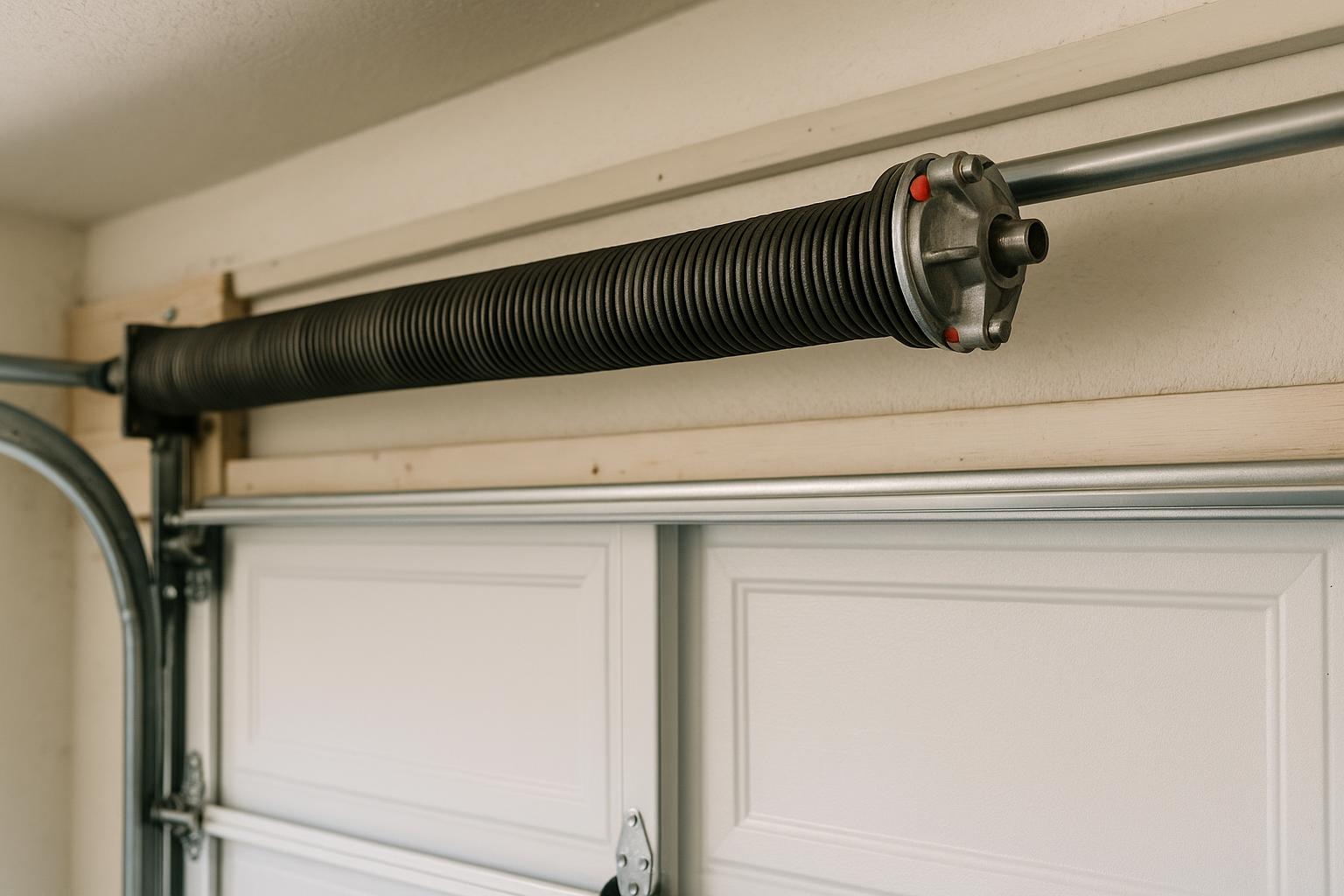
Your Garage Door Springs Are Working Harder Than You Think
Every time you open and close your garage door, the springs do the heavy lifting — literally. A standard residential garage door can weigh anywhere from 130 to 350 pounds, and the springs are responsible for counterbalancing all of that weight. Without properly functioning springs, your garage door opener alone can't safely move the door, and attempting to operate a door with failing springs can lead to serious damage or even injury.
For homeowners in Highland, where garage doors get a workout through every season, knowing when your springs are nearing the end of their lifespan can save you from unexpected breakdowns and expensive emergency repairs. Here's what you need to know about identifying worn-out springs before they snap.
Understanding the Two Types of Garage Door Springs
Before diving into the warning signs, it helps to understand the two main types of springs found in residential garage door systems:
- Torsion springs — These are mounted horizontally above the garage door opening. They use torque to lift the door and are the most common type found in modern garage door systems. Torsion springs typically last between 15,000 and 20,000 cycles (one cycle equals one full open and close).
- Extension springs — These run along the horizontal tracks on either side of the door. They stretch and contract to assist with lifting. Extension springs are more common in older homes and generally have a shorter lifespan than torsion springs.
Regardless of which type your Highland home has, both will eventually wear out and need replacement. The key is catching the signs early.
7 Warning Signs Your Garage Door Springs Are Failing
1. The Door Feels Heavier Than Usual
If you disconnect your garage door from the opener and try to lift it manually, a door with healthy springs should feel relatively light — almost weightless. If the door feels extremely heavy or you struggle to lift it past your waist, the springs have likely lost tension and aren't doing their job anymore. This is one of the earliest and most reliable indicators of spring wear.
2. The Door Opens Only Partway
When springs begin to weaken, they may not have enough force to lift the door completely. You might notice your garage door opening only a foot or two before stopping, or it may rise unevenly. If your opener is straining to get the door all the way up, worn springs are a likely culprit.
3. You Hear a Loud Bang From the Garage
If you heard a loud bang coming from your garage — almost like a firecracker — and nothing looks visibly wrong at first glance, there's a good chance a torsion spring snapped. A broken torsion spring releases an enormous amount of stored energy when it breaks, creating that startling noise. Check the spring mounted above the door. If you see a visible gap in the coil, the spring has broken and needs immediate replacement.
4. Visible Gaps or Stretched Coils
Take a moment to visually inspect your springs. Torsion springs that have broken will have an obvious gap — usually a few inches — in the middle of the coil. Extension springs that are failing may look stretched out, elongated, or uneven compared to the spring on the opposite side. Any visible deformation is a clear sign that replacement is overdue.
5. The Door Slams Shut Quickly
Healthy springs control the speed at which your garage door closes. If you notice the door dropping faster than normal or slamming shut instead of lowering smoothly, the springs are no longer providing adequate counterbalance. This is a safety hazard, especially in homes with children or pets, and should be addressed right away.
6. The Opener Is Straining or Stopping Mid-Cycle
Your garage door opener is designed to work with the springs, not replace them. When springs lose their tension, the opener has to work significantly harder. You may notice the motor running louder, the door moving slower, or the opener stopping partway through a cycle. Continuing to operate the door under these conditions can burn out the opener motor, turning a spring replacement into a much more costly repair.
7. The Door Looks Crooked When Opening or Closing
If your garage door tilts to one side during operation, it could mean that one spring has broken or weakened while the other is still functional. This uneven lifting puts stress on the tracks, cables, and opener, and can cause additional components to fail if not corrected promptly.
How Long Do Garage Door Springs Last?
Most standard garage door springs are rated for approximately 10,000 cycles. If you open and close your garage door four times a day, that works out to roughly seven years. High-cycle springs, which are available as an upgrade, can last 25,000 cycles or more — a worthwhile investment for Highland families who use their garage as a primary entry point.
Factors that can shorten spring life include:
- Lack of regular maintenance and lubrication
- Rust and corrosion from humidity or moisture exposure
- Extreme temperature swings, which are common here in Michigan
- An improperly balanced garage door
Why You Shouldn't Replace Garage Door Springs Yourself
We understand the appeal of DIY projects, but garage door spring replacement is one job that should always be left to a trained professional. Here's why:
- Extreme tension — Garage door springs are under tremendous force. A torsion spring that releases unexpectedly can cause severe injuries or even death.
- Specialized tools required — Proper spring replacement requires winding bars, vice grips, and precise calibration tools that most homeowners don't have.
- Incorrect installation risks — A spring that's wound too tightly or not enough will cause the door to operate improperly, potentially damaging other components or creating a safety hazard.
Professional technicians have the training, tools, and experience to replace springs safely and ensure the door is properly balanced when the job is done.
Extend the Life of Your Springs With Regular Maintenance
You can get more years out of your garage door springs with some simple preventive care:
- Lubricate the springs — Apply a silicone-based garage door lubricant to the springs two to three times per year. This reduces friction and helps prevent rust.
- Schedule annual inspections — A professional tune-up once a year can catch early signs of wear and keep your entire garage door system in top shape.
- Test the door balance — Disconnect the opener and manually lift the door halfway. If it stays in place, the springs are properly balanced. If it falls or rises, the tension needs adjustment.
- Keep an eye on hardware — While inspecting the springs, also check cables, rollers, and hinges for signs of wear.
Highland Garage Door Pro Is Here When You Need Us
If you've noticed any of the warning signs above, don't wait for a complete spring failure to take action. A broken spring can leave you stuck — unable to get your car out of the garage or, worse, dealing with a door that's become a safety risk.
At Highland Garage Door Pro, we provide fast, reliable spring replacement for homeowners throughout Highland, Milford, White Lake, Waterford, Commerce Township, and Hartland. Our experienced technicians will assess your springs, recommend the right solution for your door, and get everything back in working order — often in a single visit.
Whether you need a routine inspection or an emergency repair, give us a call. We're your local garage door experts, and we're here to keep your home safe and your door running smoothly.