
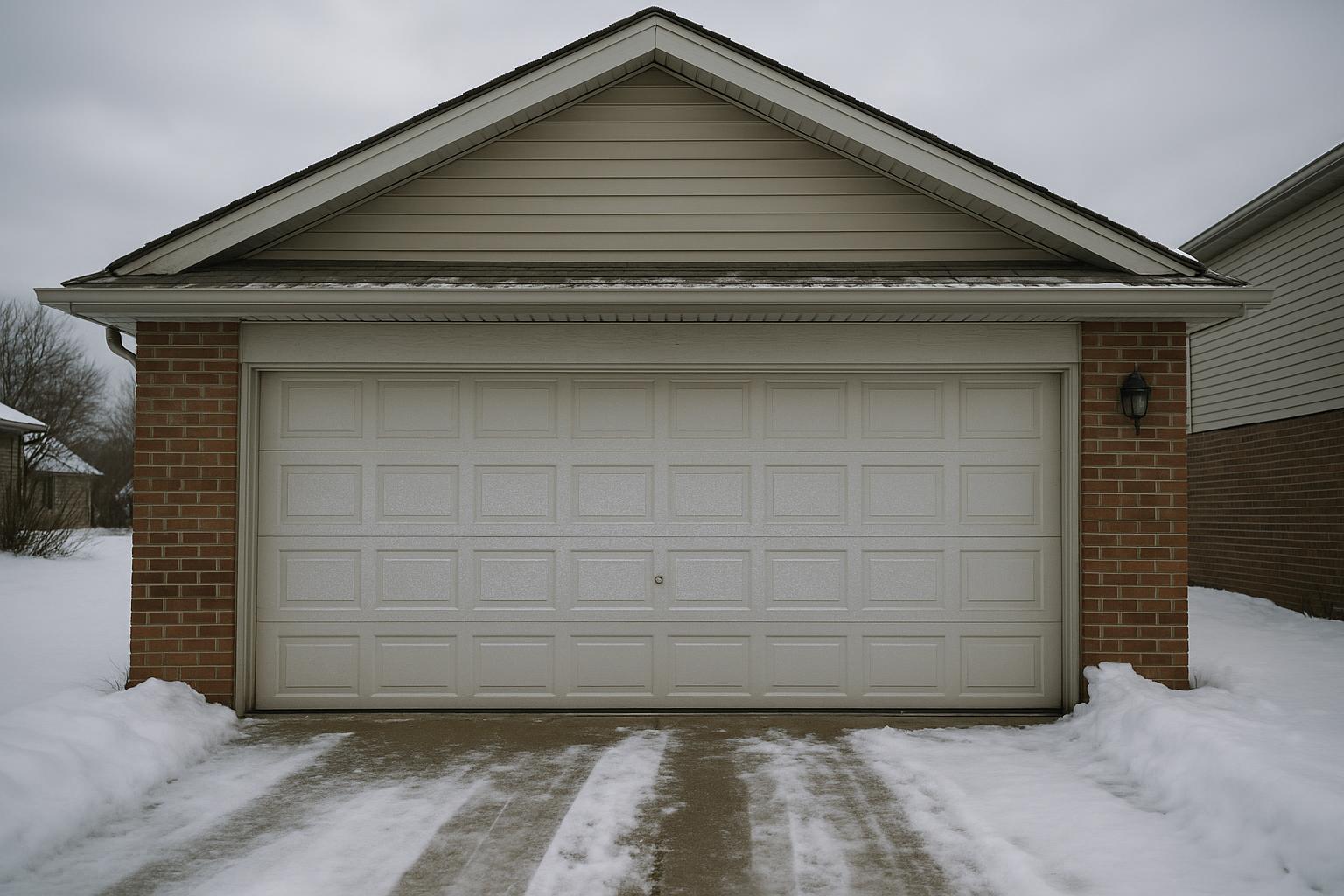
Winter Is Tough on Garage Doors in Highland, MI
If you've lived in Highland for even a single winter, you know how brutal Michigan weather can be. Temperatures regularly dip below freezing from November through March, and that kind of sustained cold doesn't just make your morning commute miserable — it takes a serious toll on your garage door system.
Every winter, we get calls from homeowners across Highland, Milford, White Lake, and the surrounding communities dealing with garage doors that won't open, make strange noises, or seem sluggish and unresponsive. In most cases, the cold weather is either the direct cause or a major contributing factor.
Understanding how freezing temperatures affect your garage door can help you take preventive steps before a small issue becomes an emergency repair. Here's what every Highland homeowner should know.
Garage Door Springs Become Brittle in the Cold
Your garage door springs are responsible for doing the heavy lifting — literally. They counterbalance the weight of the door so your opener doesn't have to do all the work. But metal contracts in cold weather, and that contraction makes springs more brittle and prone to snapping.
A broken spring is one of the most common garage door emergencies we see during the winter months. When a spring breaks, your door may not open at all, or it may feel extremely heavy if you try to lift it manually. This is not a DIY fix — garage door springs are under extreme tension and should only be replaced by a trained professional.
Signs Your Springs Are Struggling
- The door opens unevenly or appears crooked
- You hear a loud bang from the garage (this is often the sound of a spring breaking)
- The door feels much heavier than usual when lifted manually
- Your opener strains or stops mid-cycle
Metal Tracks and Hardware Contract
It's not just the springs. Every metal component in your garage door system — the tracks, hinges, rollers, and brackets — contracts slightly when temperatures drop. This contraction can cause misalignment in the tracks, which leads to the door binding, sticking, or making grinding and scraping noises as it moves.
In some cases, the contraction is minor enough that the door still operates, but it puts extra strain on your opener motor. Over time, this added stress can shorten the lifespan of your opener or cause it to fail altogether.
A quick visual inspection of your tracks can reveal obvious gaps or misalignment. If the door seems to hesitate or jerk at certain points during its travel, that's a strong sign something is off.
Weatherstripping Cracks and Fails
The rubber weatherstripping along the bottom and sides of your garage door is your first line of defense against cold air, moisture, snow, and pests. Unfortunately, rubber and vinyl weatherstripping hardens and cracks in freezing temperatures, especially after several years of exposure.
When weatherstripping fails, you'll notice cold drafts in your garage, higher energy bills if your garage is attached to your home, and possibly water or snow infiltration. Replacing worn weatherstripping is one of the most affordable and impactful maintenance tasks you can do before winter sets in.
Your Garage Door Can Freeze to the Ground
This is a classic Michigan problem. When snow melts during the day and refreezes overnight, the water along the bottom of your garage door can create an ice seal between the door and the ground. If you try to open the door while it's frozen shut, you risk damaging the weatherstripping, straining the opener, or even bending the bottom panel.
What to Do If Your Door Is Frozen Shut
- Do not repeatedly hit the opener button — this can burn out the motor or strip the gears
- Try gently tapping along the bottom of the door from inside the garage to break the ice seal
- Use a heat gun or hair dryer along the bottom edge to melt the ice
- Apply a de-icing product along the base of the door to prevent refreezing
- Once free, clear away any standing water or snow to prevent it from happening again
Lubricant Thickens and Stops Working
The lubricant on your springs, rollers, hinges, and tracks can thicken or even solidify in extreme cold. When this happens, the moving parts of your door system experience more friction, which leads to noisy operation, slower movement, and increased wear.
We recommend using a silicone-based or lithium-based garage door lubricant, which performs much better in cold temperatures than standard WD-40 or petroleum-based products. A quick application to all moving parts before winter arrives can make a noticeable difference in how smoothly your door operates all season long.
Opener Sensitivity Settings May Need Adjustment
Most modern garage door openers have force and sensitivity settings that control how much resistance the door encounters before the opener stops or reverses. In cold weather, the added friction and resistance from contracted metal and thickened lubricant can trick the opener into thinking something is blocking the door.
If your opener seems to stop or reverse for no apparent reason during cold snaps, the sensitivity settings may need a minor adjustment. Your owner's manual will have instructions, but if you're not comfortable making the change yourself, a professional can dial it in quickly during a maintenance visit.
Preventive Maintenance Is the Best Defense
The good news is that most cold-weather garage door problems are preventable. A professional maintenance visit before winter covers all the bases:
- Spring inspection — checking for wear, rust, and proper tension
- Track alignment — ensuring smooth, unobstructed travel
- Lubrication — applying cold-weather lubricant to all moving parts
- Weatherstripping check — replacing cracked or worn seals
- Opener testing — verifying force settings, safety sensors, and battery backup
- Hardware tightening — securing bolts and brackets that may have loosened over time
Think of it like winterizing your car. A little preparation goes a long way toward avoiding breakdowns when you need your garage door most — like on a freezing morning when you're already running late.
When to Call a Professional
Some winter garage door issues are easy to handle on your own, like clearing ice from the base of the door or applying lubricant. But others — especially broken springs, track misalignment, and opener malfunctions — require professional attention.
If your garage door isn't operating normally and you're in Highland, Milford, Commerce Township, Waterford, Hartland, or White Lake, Highland Garage Door Pro is here to help. We offer emergency garage door service for situations that can't wait, and our maintenance plans are designed to keep your door reliable through even the harshest Michigan winters.
Don't wait until you're stuck in your garage on the coldest day of the year. A quick call now can save you time, money, and a lot of frustration when winter hits.